
Soil moisture
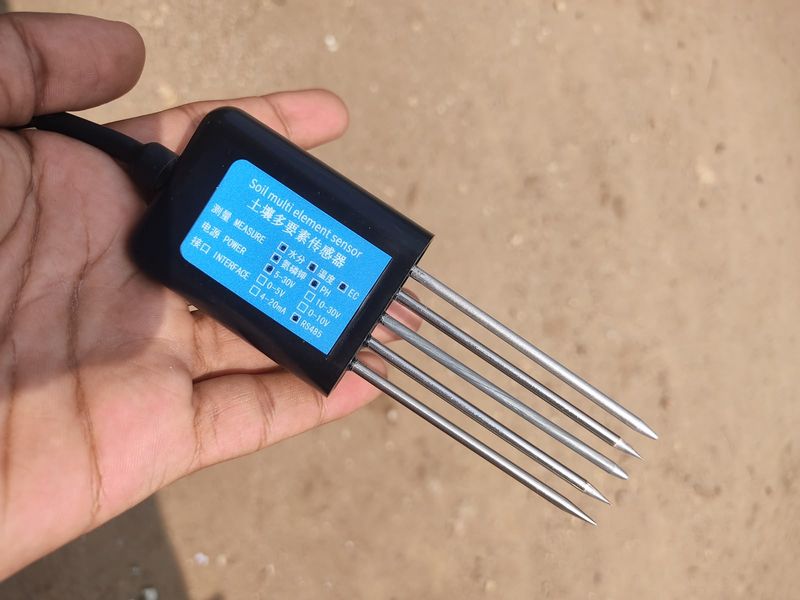
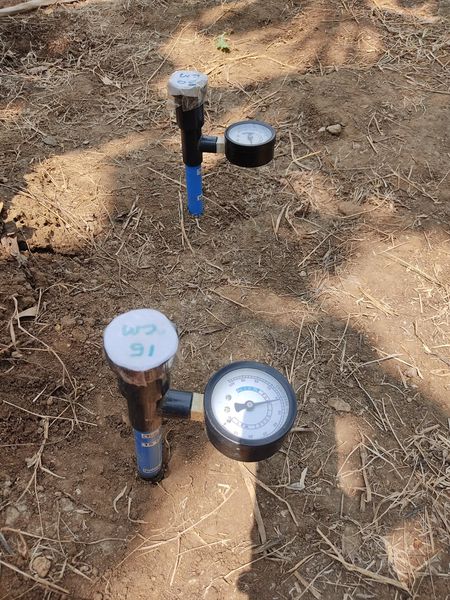
A probe through the root zone reads moisture at several depths, so irrigation follows what the banana roots actually see, not just the surface.
- Volumetric moisture by depth
- Root-zone average
- Battery powered, 4 to 5 years
Home/Use cases/Progrow FRCM
Agritech · LoRaWAN · Banana
Progrow FRCM is a LoRa-based agritech system that measures the soil, the weather and every litre of water, then switches the pump and irrigation valves by itself. Battery-powered soil nodes, a farm-house weather station and a Dragino 4G gateway on a 50 ft tower cover farms up to 8–10 km away, all managed in arpView.
The ecosystem
Each device wakes, measures and sends a short LoRaWAN uplink to the gateway on the tower, which forwards it over 4G. Hover a device, or pick one below, to follow its data.
A cut-away section of a banana field. The front face of the soil is cut open to show what is buried: the moisture probe with its sensors at each depth, and the nutrient probe at root depth, each wired to its battery-powered node. Behind the rows stand the farm house, carrying the weather station and its solar panel, and the gateway tower. Readings on this page are simulated. The tower is drawn shortened; the real gateway is mounted at 50 ft (15.2 m).
Irrigation that runs itself
The goal is simple: give each zone only what its roots need. Soil-moisture readings start and stop the pump and the valves, and the electromagnetic flow meter proves how much was used.
Waiting for the next moisture reading.
Coverage
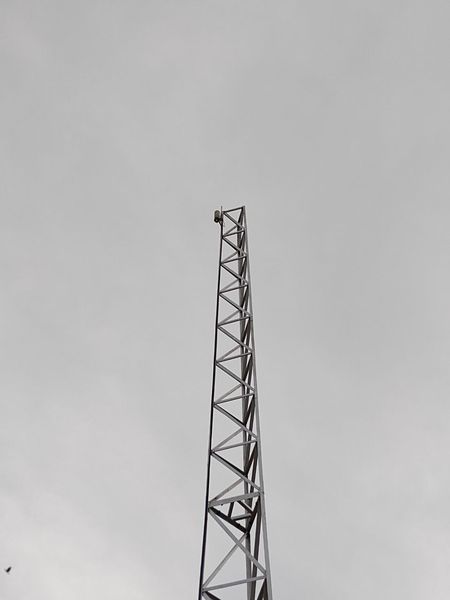
Mounted at 50 ft, the gateway clears trees and roofs. With line of sight it reaches nodes 8 to 10 km away, so one base station serves the farms around it.
Range rings at 2.5, 5, 7.5 and 10 km round the base-station gateway; the shaded band is the 8 to 10 km reach with line of sight. Farms and the tower are drawn larger than scale, and the signal readings are simulated.
The devices
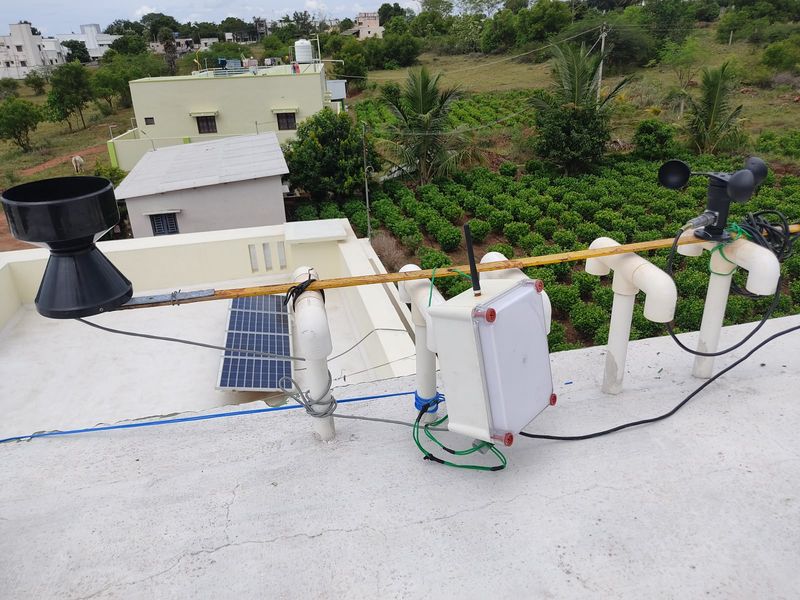
Soil nodes are sealed, battery-powered enclosures on their own posts that run for 4 to 5 years, with no panels or wiring between the banana rows. Only the weather station and the gateway sit at the farm house, where power is available.
A probe through the root zone reads moisture at several depths, so irrigation follows what the banana roots actually see, not just the surface.
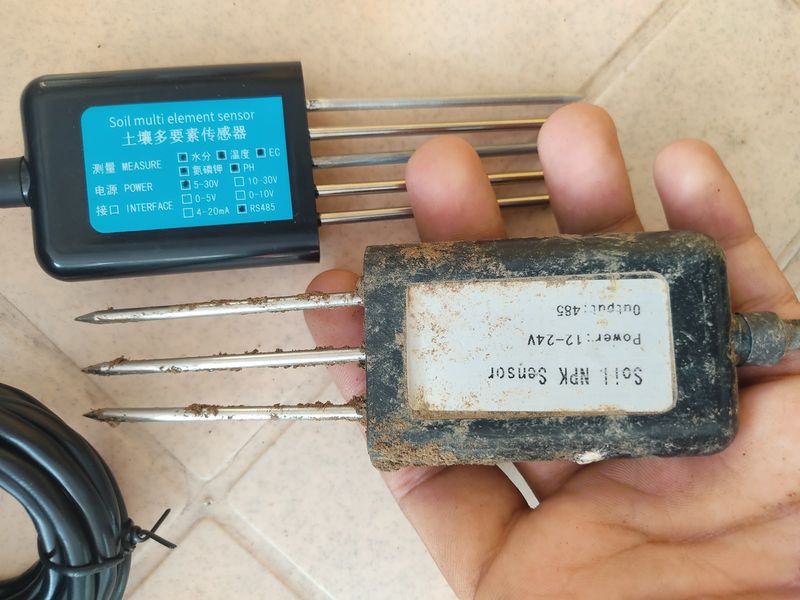
A multi-parameter probe buried at root depth tracks soil fertility and chemistry, so fertiliser goes where and when it is needed.
Mounted on the farm house, where the farmer keeps tools and supplies. Local conditions and leaf wetness guide spraying against leaf diseases, irrigation and weather protection.
Switches the borewell pump ON and OFF over LoRa, from a schedule, a moisture threshold or a tap in arpView, and reports its state back.
Operates ten irrigation valves over LoRa, opening two or three at a time so every zone gets the right pressure.
A flanged Labtech PROFLOW 5000 integral electromagnetic flow meter on the main line, accurate to ±0.3% of reading, so water use is measured, not estimated.
A Dragino DLOS8N outdoor LoRaWAN gateway on a 50 ft tower beside the farm house, high above the banana canopy, collects uplinks from across the farm and forwards them over 4G.
arpView
arpView is ARP's dashboard and device-management platform. Every reading from Progrow FRCM lands here, next to the health of the device that sent it.
The arpView panel on this page runs on the same simulated data as the field above.
| Device | Battery | Signal | Last seen | Status |
|---|
Deployments
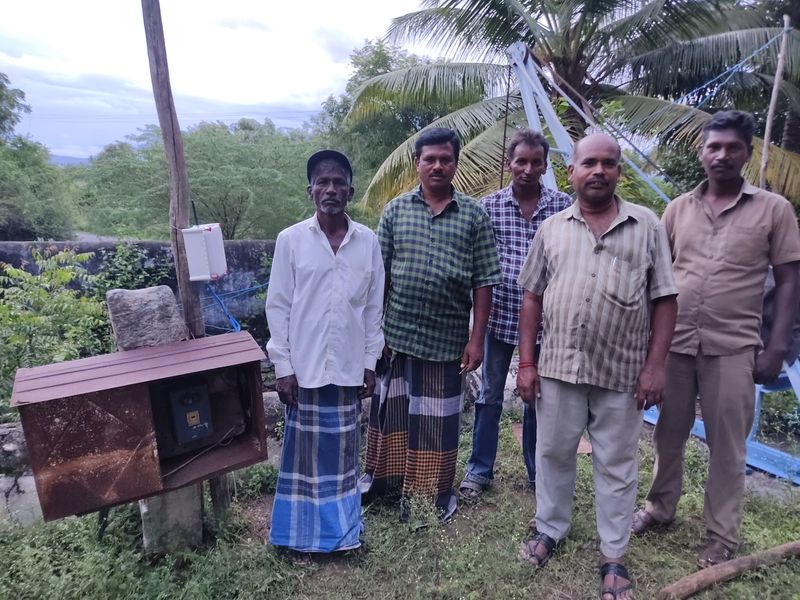
Progrow FRCM started with a pilot base station in Tamil Nadu and now runs in very different climates, from humid plantations to the Thar desert.
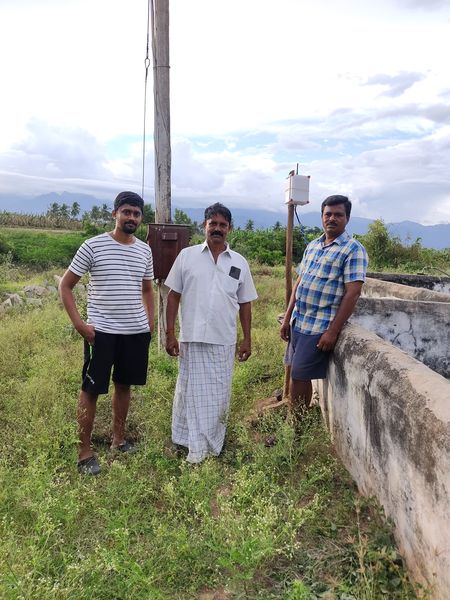
The first deployment: a 10-acre base station with the gateway tower, soil and weather nodes, and automated pump and valve control.
Soil, weather and irrigation monitoring for farms in north Gujarat.
Water-saving irrigation control in an arid region, where every cubic metre counts.

About Progrow
Progrow Farm and Rural Mission (FRCM) was founded by Mr. P. S. Jayakumar, former Managing Director and CEO of Bank of Baroda, and co-founded by Anjali Mohanty. FRCM aims to be a data analytics company for agriculture, bringing data-driven solutions, credit and technology advisory to farming communities.
ARP designs and delivers the IoT for Progrow FRCM: sensor nodes, irrigation control, the gateway network and arpView.
How the data flows
Nodes wake on schedule, read their probes and sensors, and go back to sleep to save power.
Each reading travels as a short LoRaWAN uplink to the Dragino gateway on the 50 ft tower.
The gateway forwards uplinks over 4G to arpView, where they appear on dashboards with the device's health.
The pump and valves switch on moisture rules, and alerts tell the farm team when to fertilise or protect the crop.
Tell us your crop, your acreage and what you want to measure. We will reply with a first network plan and node layout.